Written by Kathleen Morrison
Medically Reviewed by Andrea Sleeth WHNP-BC, MSCP
Key takeaways
- Yes, stress can cause hair loss. It’s more common than you’d think, and usually temporary.
- Telogen effluvium is a type of hair loss triggered by stress that pushes hair follicles into the resting phase.
- Chronic stress releases cortisol, the stress hormone, disrupting the normal hair growth cycle.
- Alopecia areata is an autoimmune disorder that causes patchy hair loss and can be triggered by stress.
- Your hair will grow back in most cases once stress levels decrease, typically within 6–12 months during the natural hair growth cycle.
- Managing stress through lifestyle changes and the right treatment can help promote hair growth.
So your hair’s been falling out more than usual, and you’re wondering… can stress cause hair loss?
Here’s the short answer: yes, absolutely.
Stress affects your body in all kinds of ways—and your scalp is no exception. When chronic stress hits, your body releases cortisol (the stress hormone), which can seriously mess with your hair growth cycle.
The good news is that stress-related hair loss is often temporary. Once you get your stress levels under control, most people notice new hair growth within several months.
How stress affects your hair follicles
Your hair follicles are like tiny factories running on a predictable schedule.
Each follicle produces hair during the anagen (growth) phase, takes a break in the telogen (resting) phase, and then starts again.
Normally, about 90% of your hair is in the anagen phase at any given time.
Here’s where stress throws everything off. When you experience severe stress, your body releases cortisol (the stress hormone), which signals hair follicles to shut down production early.
Cortisol may mess with your hair follicles by cutting back the production of key skin-supporting players like hyaluronan and proteoglycans.
What this does is it makes hair follicles break down faster than they can recover.
On top of that, cortisol throws off normal cell signaling and ramps up oxidative stress, which can interrupt your hair’s natural growth cycle and make shedding way more likely than it should be.
Types of stress-related hair loss
Not all hair loss caused by stress looks the same. Understanding which type affects you helps figure out what’s going on and what to expect.
Telogen effluvium
Telogen effluvium is a type of stress-induced hair loss that’s actually the most common—and reversible—form.
Picture this: a major stressor hits (emotional stress from a breakup, job loss, illness, or even childbirth), and within 2–3 months, you’re finding significant hair everywhere.
On your pillow, clogging the shower drain, all over your clothes.
This hair loss happens when stress pushes large numbers of growing hairs into the telogen phase simultaneously.
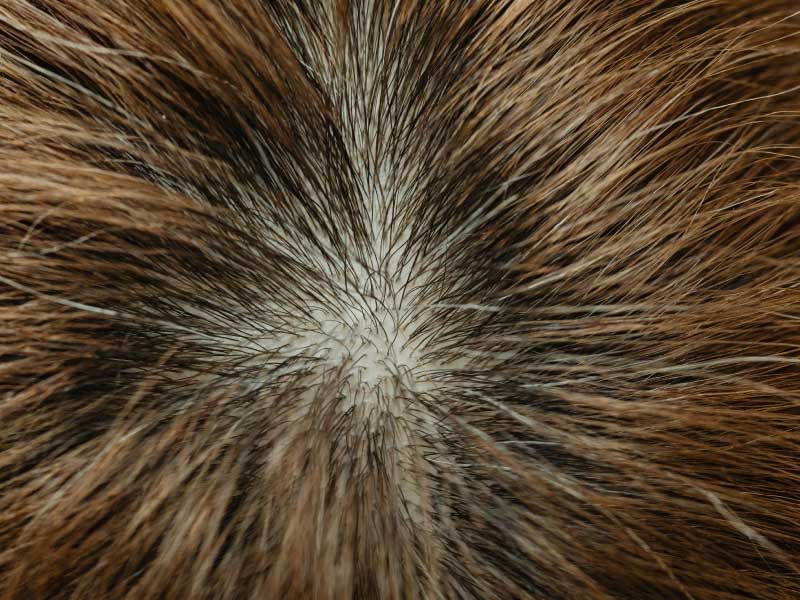
The shedding of hair typically appears diffuse, meaning your whole scalp thins rather than creating distinct bald spots.
Telogen effluvium may resolve on its own once the triggering stress passes—most people see their hair grow back within 6–8 months.
Alopecia areata
Alopecia areata is an autoimmune disorder that causes your immune system to attack hair follicles, creating smooth, round patches of complete baldness that can appear seemingly overnight. One day, your hair looks normal; the next morning, there’s a coin-sized bald spot.
While stress doesn’t directly cause alopecia, stress might trigger hair loss in genetically susceptible people.
Some experience mild patchy hair loss with one or two spots, while others develop more extensive hair thinning.
This different type of hair loss often requires medical treatment.
Chronic stress and thinning hair
Long-term chronic stress creates a slow-burning effect on hair health. Unlike telogen effluvium’s dramatic hair shedding, this causes gradual hair thinning that sneaks up on you.
Human hair becomes brittle, loses shine, and breaks easily. Your body stays in survival mode, consistently deprioritizing hair follicle regeneration.
Will your hair grow back?
Yes, stress-related hair loss is usually temporary. Your hair follicles remain alive and capable of producing new hair once conditions improve.
Recovery follows a fairly predictable timeline. Most people notice hair shedding slows within 3–6 months after stress levels decrease.
You’ll start to notice new hair growth around months 4–6, appearing as short baby hairs along your hairline. Complete hair regrowth to your original density can typically take 12–18 months for hair.
Factors that impact hair growth
Several factors affect how quickly your hair grows back:
- Your age
- Overall health
- Nutrition
- Whether you’re still experiencing ongoing stress
- Hormonal regulation (menopause)
- Underlying conditions like thyroid imbalances or iron deficiency.
If you’re concerned about experiencing sudden hair loss that isn’t improving, or if you notice bald spots appearing, it might be time to see a healthcare practitioner to determine the cause of hair loss.
How to support hair regrowth naturally
Taking action to reduce hair shedding means addressing both the root cause (stress) and supporting your hair health directly.
Giving it time (seriously)
This one might feel frustrating to hear, but for telogen effluvium specifically, time is often the most effective "treatment."
Once the triggering stressor passes, your hair follicles typically return to their normal growth cycle on their own.
If your hair loss is clearly tied to a specific stressful event and you're not seeing other concerning symptoms, your provider may recommend a watch-and-wait approach before jumping into other options.
Manage your stress
Effective stress management goes beyond just “relaxing.” Regular exercise acts like a pressure release valve for cortisol—even 30 minutes of walking daily can help.
Quality sleep matters too, since your body repairs and regenerates during deep sleep.
Support healthy hair naturally
- Nutrition plays a big role. Hair needs protein, iron, zinc, and B vitamins to grow and stay strong
- Scalp massage can help increase blood flow to hair follicles, which may support natural growth
- Double washing with shampoo to get gunk out first, then cleanse the follicles
- Gentle hair care helps reduce breakage and additional shedding
- Use a soft-bristle brush and avoid tight hairstyles that put stress on already-weakened roots
- Switching up shampoos so your hair doesn't adapt
- Using ketoconazole shampoo to prevent fungal buildup that can impact hair growth
- Using caffeine shampoo to help improve blood flow to the area
When to seek professional guidance
If hair loss continues beyond 6 months despite stress reduction, or if you notice sudden bald spots or scalp inflammation, it’s worth getting checked out.
Treatment options for stress-related hair loss
Okay, so you know stress is messing with your hair — now what? The good news is that there are several treatment options.
You can talk about it with your healthcare provider to help support regrowth, depending on what's going on with your body.
Medications to address the stress itself
It sounds obvious, but it's worth saying: if stress caused the problem, managing that stress is a key part of the solution.
This isn't about bubble baths and face masks (though hey, if that helps, go for it).
If appropriate, your provider may prescribe anti-anxiety medications like SSRIs and SNRIs to help your body stop operating in crisis mode.
Oral Minoxidil
Originally developed as a blood pressure medication, doctors noticed that patients were experiencing increased hair growth as a side effect of Oral Minoxidil.
Now, low-dose Oral Minoxidil is sometimes prescribed off-label for hair loss, especially if hormonal changes are contributing to stress (and therefore, hair loss). Because it's a systemic medication (meaning it affects your whole body, not just your scalp), it requires a prescription.
It also typically involves monitoring for potential side effects like fluid retention, changes in blood pressure, or increased body hair.
Topical minoxidil
Topical inoxidil is FDA-approved for hair loss and is one of the most well-studied options out there.
It's available over the counter in 2% and 5% formulations and works by helping to extend the growth phase of the hair cycle and increase blood flow to the scalp.
It's generally considered safe for most people, but chatting with a healthcare provider before starting is always a good idea, especially if you're pregnant, breastfeeding, or have other health conditions.
Wisp treatment options are available only after consultation with a licensed medical professional. You should consult with your healthcare provider before starting a new supplement or treatment regimen. Individual results may vary.
Corticosteroids for alopecia areata
If your hair loss is due to alopecia areata (the autoimmune type that causes patchy bald spots), treatment looks a bit different.
Corticosteroids — either injected into the affected areas, applied topically, or taken orally — are commonly used to help calm the immune response that's attacking hair follicles.
This is definitely a "talk to your dermatologist" situation, as the right approach depends on how extensive the hair loss is and your overall health history.
*Wisp does not offer corticosteroid treatments for alopecia areata. These therapies require in-person evaluation and monitoring by a dermatologist or other qualified health care provider.
When something deeper is adding to your stress
Sometimes what feels like "just stress" is actually your body dealing with something else entirely. And that something else is making you more stressed.
It's a frustrating cycle, but the good news is that figuring out the underlying culprit can help you break it.
Hormonal shifts
Hormonal shifts can be a major source of stress (and vice versa). Also, changes during menopause can add stress you didn't ask for.
Hot flashes disrupting your sleep, mood swings that come out of nowhere, brain fog that makes you feel like you're losing it—all of that takes a toll.
And yes, those same hormonal changes can also affect your hair independently. If you're noticing hair changes alongside other symptoms of female pattern hair loss that scream "my hormones are doing something," it might be worth exploring what's going on.
A menopause consult connects you with licensed providers who can help you make sense of it all.
Nutritional gaps
Deficiencies like low iron or vitamin D can leave you feeling exhausted, foggy, and just... off.
When your body's running on empty, everything feels harder, and that added strain can pile onto your stress levels.
Checking in on your nutrient status is a simple way to rule out (or address) one piece of the puzzle. At-home testing kits make it easy to see what's happening inside without the hassle.
Take charge of your hair health
Understanding that stress and hair loss are connected, and that hair loss is temporary in most cases, provides both validation and hope.
Whether you’re noticing gradual hair thinning or just want to support healthy hair during a stressful season, small, consistent steps make a difference.
If you’re ready to get answers, Wisp connects you with licensed providers who can help.
Schedule your appointment or take our Symptoms Quiz to get started, because feeling confident about your health shouldn’t cause anxiety and depression about visiting the doctor’s office.
This blog post is for informational and educational purposes only and should not be taken as professional advice. Always consult with a qualified professional before making any decisions based on the information provided here.
Trusted Treatments
Oral Minoxidil
Starting at $36
A trusted prescription solution for hormone-related hair loss.
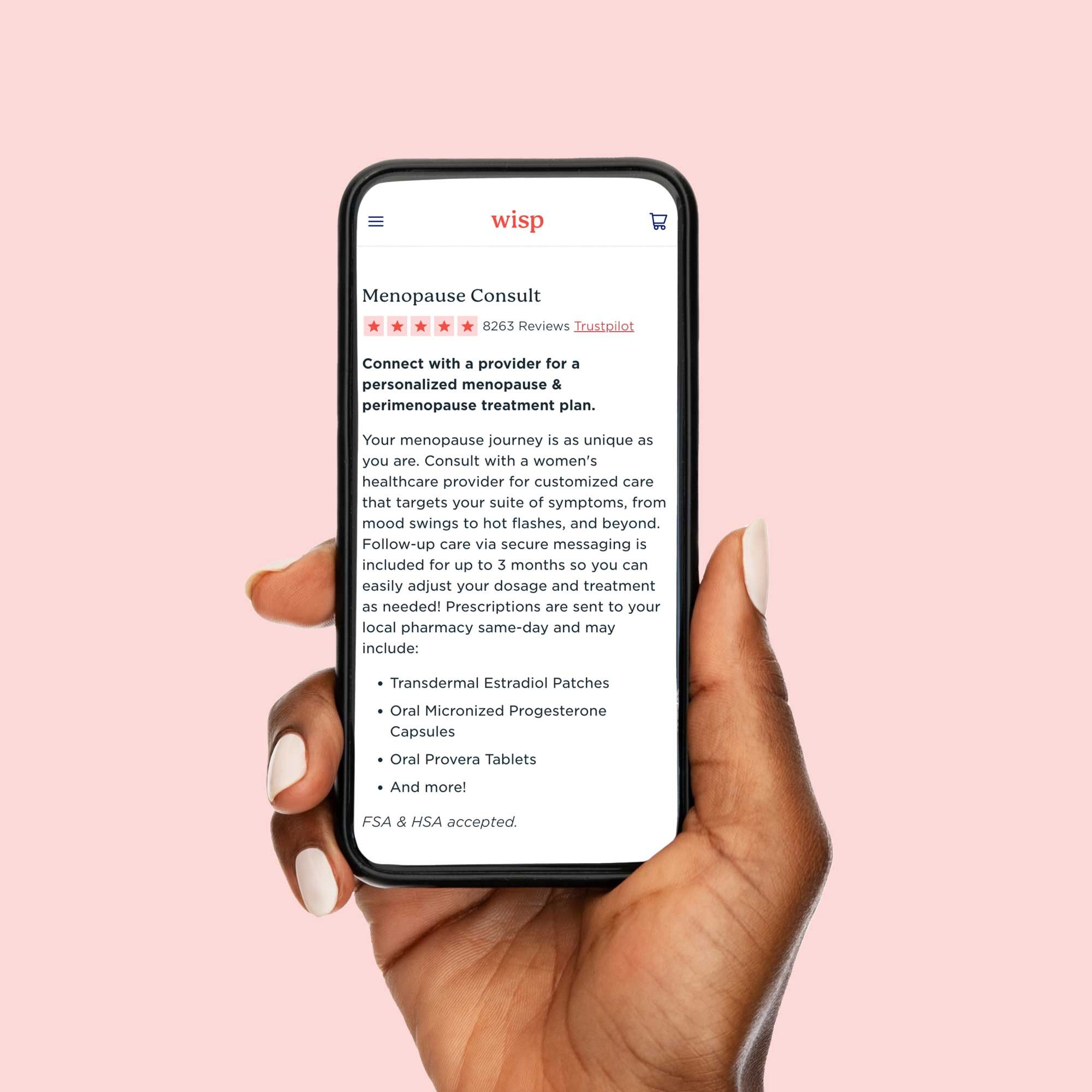
Menopause Consult Online
$99
Customized care for menopause & perimenopause symptoms including estrogen & progesterone hormone replacement.